Check Your Calendar: Hachette-Amazon Contract Dispute Started in November 2013

Amazon’s months-long dispute has been going on for longer than anyone had previously suspected.

The ongoing contract fight between Hachette and Amazon entered its Nth round today as the retailer removed the pre-order buttons for many Hachette titles. According to The Bookseller:

Amazon appears to have stepped up the pressure in its battle over terms with Hachette Book Group in the US, removing the pre-order button on a number of forthcoming titles including the new Robert Galbraith novel.

Instead of the option to pre-order, certain major titles are listed as “currently unavailable”, with customers offered the option of signing up to be emailed when the book is available.

Physical editions of J K Rowling’s next Galbraith novel, The Silkworm, out in the US on 19th June, and Tom Rob Smith’s The Farm, released in the US on 3rd June, are among the many titles affected by the removal of the pre-order option on the Amazon US site today.

Not all of the details have been disclosed by wither Hachette or Amazon, but it is clear that Amazon is seeking to renegotiate their contract with Hachette. Amazon is playing hardball by reducing the number of copies they stock and by giving Hachette exactly what they wanted under Agency pricing: an end to discounts from the retail price.

There are also reports that Amazon is selling Hachette ebooks at full price, though of course those cannot be delayed in shipping or stocking.

News about the contract dispute first broke earlier this month in the NY Times, which hinted at the dispute having gone on for months. Michael J Sullivan concurred, reporting on DBW that he had seen this going on since February 2014.

Now it seems that this dispute started even earlier than anyone had suspected. Earlier this week Kristin Nelson, an agent for a number of authors who have books with Hachette, wrote that she had noticed the stock issue as early as November:

This just hit the newswire in the last week but I’ve informally known about this since late fall 2013 (as early as November). The problem? My Hachette authors and I noticed this “shipping issue” multiple times and brought it to our Hachette Editors’ attention. 

Multiple times. Repeated emails. We were assured that all was fine. (Which we, of course, did not believe since it kept happening….)

This is yet another moment where big publishing could have chosen to partner with authors and agents by explaining the truth behind Amazon’s muscle flexing.

Instead, Hachette choose to go with “we don’t discuss contract negotiations” tactic, which leaves their authors in the dark, agents like me fuming, and fosters a general atmosphere of distrust that the publisher is not being forthright.

While most stories today will focus on the buttons being removed, I think the more important story is just how long this fight has been going on. We’re now in month seven, and Amazon has tightened the screws again.

I think we now know why Hachette’s parent company, Lagardère, reported a 5.3% drop in revenue in their publishing division last quarter. They don’t break out the revenue based on market (they have operations in France, US, UK, and elsewhere), so it wasn’t clear where the loss occurred, but I think we know.

I don’t think that drop in revenue is a coincidence; Amazon is having an explicit effect on the company’s bottom line.

Would anyone care to guess how big the drop will be in the next quarterly report?
Dynamite Comics Settles Bogus Trademark Lawsuit Over John Carter of Mars

The Edgar Rice Burroughs Estate’s 2-year-old trademark lawsuit against Dynamite Comics came to a surprising conclusion earlier this week.

In 2012 the Burroughs estate, upset over Dynamite Comics publishing graphic novels based on Burroughs 's Barsoom stories which had already fallen into the public domain, filed a legally questionable trademark infringement lawsuit:

Still, ERB, Inc. argues that Dynamic’s comic book series does not respect Burroughs’ original works and hurts ERB, Inc.’s image–the family argues that some comic covers even showed pornographic images with over-feminine features. Provided that these remarks could ground any claim of actual disrespect of Burroughs’ work, ERB, Inc. could have argued that Dynamic’s series infringes on Burroughs’ moral rights, which are permanent, and indeed cover any attack to the work’s integrity. No matter, then, that the works would have fallen in the public domain, ERB, Inc. would still be able to argue moral rights infringement. The likelihood of success of such a claim, however, is uncertain in the United States.

But trademark protection over Burroughs’ work is not much more likely to succeed. Unlike copyrights, trademarks can persist as long as the mark is identified as a source for specific goods or services. Under such a claim, however, a party must show that its mark is distinctive, protectable, and that the litigious work indeed infringes on the mark. As to distinctiveness, all courts have held so far that fictional characters only have distinctiveness when “they have undergone a reasonable degree of circulation and established some level of public recognition.”

The Burroughs estate alleged that the covers and images in the Dynamite Comics editions damaged their existing trademarks. The works were described as pornographic, but if you ask me they were fairly close to the descriptions in the original books.

Just so you know, Edgar Rice Burroughs died in 1950. The copyrights for most of his Barsoom books have expired in the US (the public domain works can be found on Project Gutenberg).

This means that thanks to the recent lawsuit over Sherlock Holmes the Burroughs estate can only claim copyright over elements unique to those two books. Everything else, including the character of John Carter, is out of copyright. But trademark is another matter, and it is far from clear that one can successfully sue a publisher for damaging a trademark in this way.

Alas, we’re not going to see this case argued in court. Earlier this week the Burroughs estate settled with Dynamite Comics. The exact details of the settlement have not been disclosed, and in fact the entire situation is obscured by the Burroughs estate also revoking a license granted to Marvel/Disney and signing a new contract with Dynamite Comics. (That Marvel/Disney license probably covered, for example, the execrable 2012 John Carter movie.)

And that is a pity, because I was hoping that this copyright troll would be taken down a notch or two.

The Burroughs estate has a history of making questionable copyright claims. For example, in 2004 they sent a threatening letter to a New Zealand publisher over the use of Tarzan. Needless to say, the copyright had already expired in NZ, but even the threat of a lawsuit was enough to discourage the publisher:

So even though Tarzan has been a part of our shared mythologies, daydreams and fantasies for nearly 100 years, shaping stories and art around the world, he’s still – as far as ERB Inc. is concerned – the company’s exclusive private property. And Nigel Cox was trespassing. VUP’s lawyers advised that ERB Inc.’s case was weak (at least in New Zealand), but fighting it in court would cost a fortune. There was nothing VUP could do. ERB Inc. insisted that Tarzan Presley never be reprinted or sold overseas. Cox’s masterpiece slipped out of sight, becoming a great lost treasure of New Zealand literature, buried in the depths of the copyright jungle.

Tarzan Presley, a book which is arguably legal to publish and sell even in the US, is not just out of print but it is also practically unavailable. The best price is $38 for a used copy on Amazon.

And a few years after that the Burroughs estate also bullied the publisher of an RPG manual:

They (through the same lawyers) tried to shut down my release of a Sword-and-Planet RPG called MARS ( http://www.rpgnow.com/index.php?cPath=272_4256 ) back in 2007, despite it being a pastiche and featuring NONE of Burroughs' creations or trademarks.

I informed them that they do not own a genre — and prior art exists, ranging from the Jandar of Callisto novels by Lin Carter, to ERB contemporaries like Otis Adelbert Kline, etc.

That case was resolved by the publisher forcing the Burroughs estate to back down, but the next publisher probably won’t be so lucky. Thanks to the Dynamite Comics contract, the Burroughs estate will continue to have funds to be a copyright troll, exacting a fee from creators who want to write new stories.

Copyright may have been intended to encourage the creation of new works, but as you can see here it is used far too often by vultures and other middlemen to squash new works being created. If this isn’t a strong argument for shorter copyright terms, I don’t know what is.

Yes, Trigger Warnings Could Lead to Censorship

If you’ve been following book news over the past few months then you may have noticed the ongoing debate about trigger warnings.

Professors and student advocates at some US universities have been debating whether classes which read certain types of literature should add a "trigger warning" to the class syllabus to warn students suffering from PTSD or who were victims of assault that a book might trigger an incident.

There’s been a lot of debate on this topic, with some going so far as to ridicule the idea, and on the other end of the spectrum propose trigger warnings for "heterosexism, cissexism, ableism, and other issues of oppression". As someone who is in principle in favor of the idea, I have been sitting out the debate, but today I decided to jump in and address one of my concerns that some have discarded out of hand.

Rebecca Schinsky, writing over at Book Riot, doesn’t see any reason why we should be worried about censorship:

Some of these pieces equate skipping a book that contains material that might trigger you with intellectual laziness and an unwillingness to be offended (that is: the writers of these pieces do not really understand what it is to have triggers). Others mount the hand-wringing slippery slope argument that trigger warnings will put us one step closer to book bannings (that is: they fail to acknowledge the significant differences between individual discretion and institutionalized, government-enforced censorship).

What Rebecca fails to acknowledge is that there are more types of censorship than government-enforced censorship. For example, there is the subtle commercial censorship system of the MPAA ratings. While that appears to be voluntary, any movie without an MPAA rating will have a difficult time getting into movie theaters. Similarly, any movie with an NC-17 rating simply won’t be shown.

And given that the MPAA’s ratings board has at times explicitly said that you need to change this, that, and the other in order to get a lower rating, this is a form of censorship:

And that’s not the only reason to be concerned. Here in the US we have a censorship issue on the local level.

It’s called book banning.

To name one example, it was only a couple months ago that an Idaho school district banned Sherman Alexie’s Absolutely True Diary of a Part-Time Indian, over the protests of students, teachers, and parents.

The book makes reference to masturbation, contains profanity and has been viewed by many as anti-Christian. Some Meridian School District parents and students cautioned the board about banning the book, while others labeled it pornographic and racist.

What Rebecca fails to acknowledge is that if trigger warnings become more widespread, if it becomes common for books to be listed in catalogs with trigger warnings, then we will be handing the book banners another weapon in their fight to remove literature from libraries and schools. We might even see parents groups pressuring schools and libraries to not buy these books in the first place, simply because they come with a trigger warning. And if that happens, we are all going to be harmed.

So yes, when someone raises concerns of censorship, they’re not misstating the case, they’re not misunderstanding the situation, and they’re not, as Rebecca put it, wringing their hands.

In conclusion, when The Guardian pointed out that trigger warnings were "one small step from book banning", they were not wrong:

Of course, life doesn’t come with a trigger warning, even if it should. And while a classroom conversation about emotionally fraught subjects would seem not only advisable but also just part of any decent teaching method, slapping a trigger warning on classic works of literature seems a short step away from book banning, a kind of censorship based on offenses to individual feelings.

And as the idea of trigger warnings moves forward, we need to keep the potential downsides in mind. The best way to avoid trigger warnings being misused is to not develop a system where they can be misused.

image by simonov

Pocketbook Launches the 6″ Ultra, 8″ Ink Pad eBook Readers

Pocketbook’s much-leaked, camera-equipped, high-end Pocketbook Ultra ebook reader officially launched today in Russia.

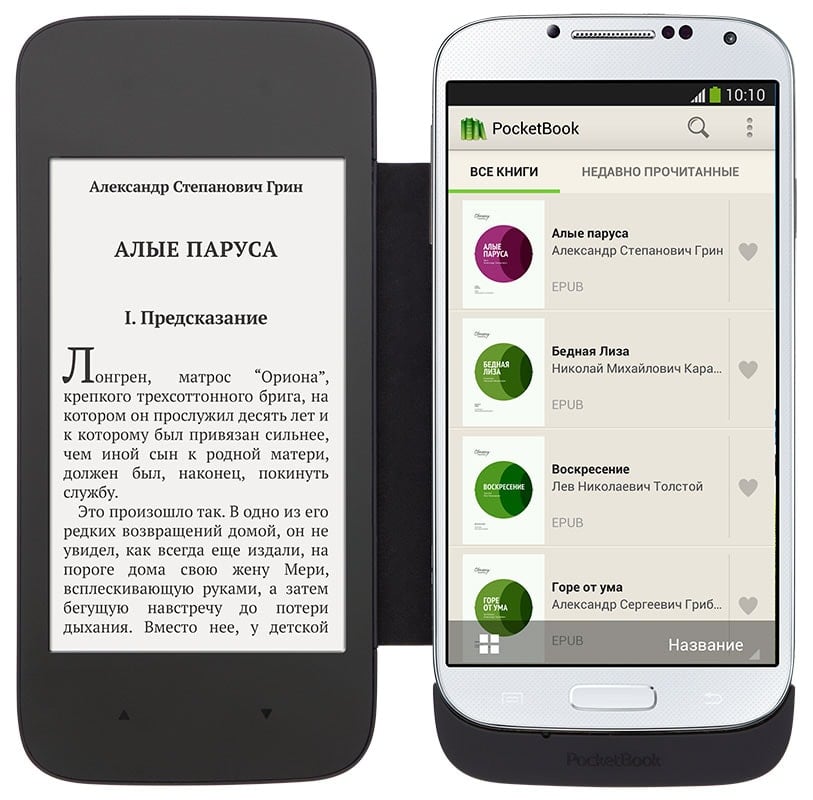
The Ukrainian ereader maker held a launch event today for their new devices. In addition to the Ultra, Pocketbook also showed off the CAD Reader (with its 13.3″ screen), the Aqua, the CoverReader (an E-ink case for the Samsung Galaxy S4), and a wholly unannounced and unexpected 8″ ebook reader – the Ink Pad.

Few details are known about the new models aside from the price (The-eBook.org didn’t post much), but I do have some new info on prices and the expected release date (in Russia).

The 6″ Pocketbook Aqua, which launched in Germany a few months ago, is going to be available in Russia in 2 to 3 weeks. Retail will be 6990 rubles, or about $200 USD.

The Pocketbook CoverReader, which as you may recall was first shown off late last year (video), is already available in Russia. It’s selling for 3490 rubles.

The 13.3″ CAD Reader is still in the works. Pocketbooks hopes to have it on the market by the end of the year, price unknown.

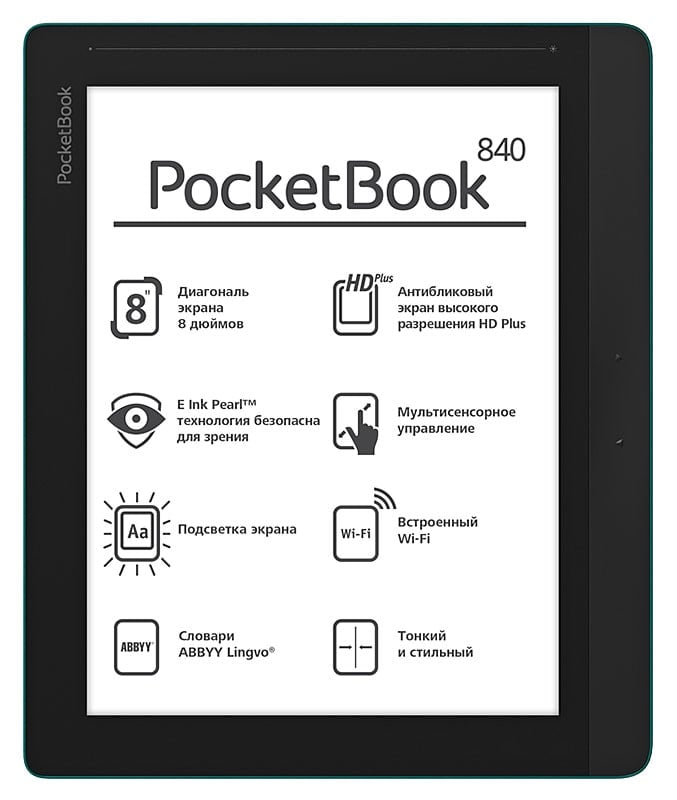
Ink Pad 840

And then there’s the PocketBook Ink Pad 840. This device came as a complete surprise, and it sports a high resolution 8″ E-ink screen with a touchscreen and frontlight. This is basically the same device as the Pocketbook Color Lux, only without the color E-ink screen.

Update: This ereader runs Pocketbook’s reading software on a 1GHz CPU with 512MB RAM, 4GB internal storage, Wifi, and a 1.5Ah battery which is expected to give up to a month of runtime (source). Thanks, Name!

The Ink Pad 840 has a screen resolution of 1,600 x 1,200 (the same as on the Onyx Boox i86), and it will cost 9990 rubles (about $290 USD) when it ships in Russia in July.

Ultra

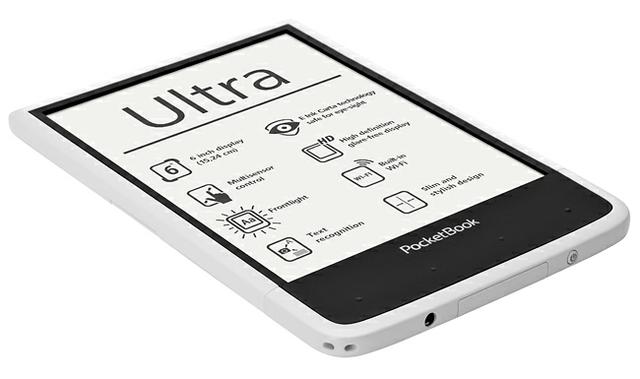
And finally we have the Ultra.

There is in fact very little which we don’t know about this device, and in fact today’s launch doesn’t add any details other than confirmation that it has support for audio.

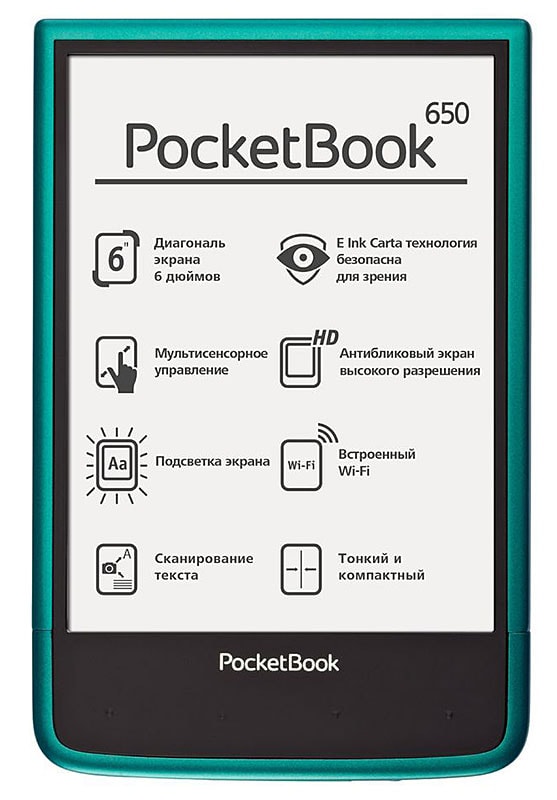
The Pocketbook Ultra is equipped with a 6″ Carta E-ink screen (screen resolution of 1024 x 758). It has a frontlight, touchscreen, page turn buttons mounted on the rear of the device, and a rear-facing camera. I cannot tell you the resolution, but I can confirm the reports that the camera is used to take photos so the user can OCR the text and add notes.

Update: The Ultra has a 5MP camera with Flash. It runs Pocketbook’s reading software on a 1GHz CPU with 512MB RAM, 4GB internal storage, Wifi, and a 1.5Ah battery which is expected to give up to a month of runtime (source). Thanks, Name!

The Ultra is scheduled to ship in Russia in early July, and it will sell for 8990 rubles (about $260 USD) . Previous leaks indicate that the price in Germany will be 199 euros, but I don’t have any details about pricing in other markets.


Kobo to Launch New Book Reviews Section

Whether they come from Goodreads, iDreamBooks, or Amazon, book reviews make the ebookstore. For the longest time now Kobo has lacked book reviews, but in the not too distant future that is going to change.

A few days ago Kobo announced on the Kobo Writing Life blog that they are growing their own review section:

In the near future, Kobo will begin featuring book reviews! Customers will be able to write reviews and choose star ratings for your titles and post them on the book page. We want to give KWL authors the opportunity to begin collecting reviews for their titles before the feature goes live!

The new review section is being developed in partnership with Evolcalize, and just about anyone can post a review. All that is required is a Facebook account; you don’t even have to log in with your Kobo account (in fact, you cannot).


If you would like to post a review, click this link, log in with your Facebook account, and search by  either title or author. Your review won’t be immediately posted to the Kobo website, but it will be added to the site in the near future (once this feature officially launches).

As you might recall, Kobo used to rely on Goodreads as a source of reviews, but they broke ties in July 2013. This was about 4 months after Goodreads was acquired by Amazon, raising questions as to whose idea it was to break up.

Frankly, I was a little surprised that it took Kobo this long to organize a replacement, especially considering that there already was a readily available alternative. iDreamBooks, which bills it itself as the Rotten Tomatoes of book reviews, launched in 2012. This review aggregator last crossed my desk in April 2013 when it announced a deal with Sony to supply reviews to the Reader Store.

It’s a shame Kobo couldn’t work out a similar deal.

Thanks, Stephen!

Were Indie Authors Really Segregated at the RT Booklovers Convention?

There’s a story going around today that self-published authors were relegated to second-class status at a book fair in New Orleans yesterday, but whether that actually happened is still up for debate.

Here’s what I know for sure:

  • The RT Booklovers Convention wrapped up yesterday with the Giant Book Fair, a massive event where 700 authors crowd into a couple ballrooms and sign and sell books. The authors were split between the Grand and Mardi Gras ballrooms at the Marriott Hotel in New Orleans, with one room over twice the the size of the other (floor plans).

Here’s what I don’t know:

  • Exactly how the authors were divided, or why.

According to Hugh Howey, the smaller Mardi Gras ballroom was reserved specifically for authors labeled as "aspiring". In other words, self-published authors:

Imagine selling two million books, having half a dozen of your novels hit the New York Times bestseller list, being inundated with thousands of fan emails every month, and then having someone call you an “aspiring writer.”

That’s what happened in New Orleans this weekend, when the planners of the RT Booklovers Convention decided to place self-published authors in a dinky room off to the side while the traditionally published authors sat at tables in the grand ballroom.

Authors like Liliana Hart, who is at the top of the game not just in the romance genre but in all of publishing, was labeled an “Aspiring Author.”

That sounds like a damning critique of the folks running the convention and their disdain for self-published authors, right?

Not exactly.

I was prepared to report on Howey’s post and second his complaints, but while I was looking for background information I found an alternate explanation as well as details which debunked Howey’s description.

For one thing, if you look at the floor plan I linked to you’ll see that the Mardi Gras ballroom is hardly a "dinky room off to the side". Depending on how the traffic was routed it might actually have been more accessible than the Grand ballroom.

And that’s not all. According to Courtney Milan, the authors were divided based on how their books were sold:

Some self-published authors are talking about one specific thing: that is, the separation of authors into two rooms on the basis of criteria that would not have been obvious to readers. Authors who were selling nonreturnable books–typically, authors from digital-first presses and self-published authors–were selling books on consignment, whereas the other books were being sold by a bookstore.

That meant that the authors needed to bring those books, have them checked out, determine the sales of books afterward, and fill out paperwork as to how they were to be paid. I believe RT handled those sales. By contrast, a bookstore was handling the sales for the books that were returnable. At the RT Giant Bookfair, for administrative ease, authors with nonreturnable books were put into a separate room. This saves a little time because then RT staff would automatically know if an author needed to be checked in/checked out.

…

Rumor has it that someone claimed that the authors with returnable books were “real authors” and that the authors who were selling their books on a consignment basis were “aspiring authors.” As far as I can tell, this appears to have been one misinformed volunteer, rather than the official RT Convention description. It was not something that I saw or heard, and I do not think it was widespread.

I don’t know that Milan’s explanation is correct; in fact I agree with the commenter on her blog who explained why the division was probably unnecessary.

But in spite of it being unnecessary, I think the division along returnable/consignment lines is much more plausible than dividing the authors based on self-published and traditionally published. It sounds like the kind of decision which was made to reduce the hassle of those in charge of running the Giant Book Fair, and hang the problems it created for everyone else.

And it did create problems; Kendall Grey took to Facebook this morning to detail just how cramped she was in the Mardi Gras ballroom. Among here complaints:

"Two authors will be at each table; therefore, you will have half of a 6 foot table — which is a 3 foot length." <–LIE. I didn’t have a ruler, but I took a picture, and my space was nowhere NEAR 3 feet. See below.

"Authors are arranged in alpha order by last name. This applies to every section." <–LIE. If we’d been organized alphabetically, the two rooms would have been broken up around the last names beginning with the letter M (or thereabouts), NOT by publishing platform.

I can’t tell you what really happened at the Giant Book Fair; I wasn’t there. (And from what I can tell, neither was Howey.) If you have a first hand account which better explains what was going on, the comment section is open.

But whatever happened, it’s clear that the policies were not well explained nor well executed.  If this event had been planned better then authors would not be complaining about being cramped. And if the policy had been explained better then we would not have rumors going around that self-published authors were being maligned.

Let’s hope the RT Booklovers Convention does better next year.

Amazon now Bullying Bonnier in Negotiations over Book, eBook Contracts

Hot on the heels of news about the bitter Amazon-Hachette renegotiations, new reports are coming out of Germany today that Amazon is using similar hardball tactics against another publisher.

Frankfurter Allgemeine Zeitung (FAZ) reported this morning that Amazon is renegotiating its contracts with Bonnier, a Swedish publishing conglomerate. Bonnier owns several German publishers (including Ullsteinhaus, Piper, Berlin, Carlsen), and Amazon is using tricks similar to the ones used against Hachette here in the US.

According to FAZ, Amazon is reducing the number of copies of Bonnier titles they carry in their warehouses, adding long shipping delays to newly ordered books.

Sources say that Amazon is seeking not just new terms for their book contract with Bonnier but also new terms for their ebook contract. The retailer is reportedly pressuring Bonnier into offering a steeper discount on ebooks. Rather than pay Bonnier the accepted industry standard 70%, Amazon wants to reduce that to only 50% to 60%.

And that’s not good news for anyone other than Amazon.

I know some might expect me to defend Amazon here in much the same way I took their side in the Hachette dispute, but one key difference between the Bonnier and Hachette negotiations is that with the latter there is a potential upside for consumers. Consumers stand to gain nothing from the Bonnier dispute.

In the US, Amazon’s fight is against a publisher which had previously conspired to raise ebook prices and restrict competition. If Amazon wins it means means lower book prices in the long run, but that probably will not happen in Germany.

Germany has fixed price book laws; publishers set the retail price and retailers are not allowed to discount their books more than (I think) 10%. As a result, any money that Amazon squeezes out of a publisher ends up in Amazon’s pocket, and not in the pocket of consumers.

Spain Wants to Kill off Spanish News Sites via a "Google Tax"

Ask any news site and they’ll tell you that Google’s search engine and Google News are two of the best sources of website traffic.

Google doesn’t charge websites anything for all the free advertising, but rather than count themselves lucky every so often someone comes up with the idea that Google should pay for the privilege of providing free advertising.

This idea has been tried unsuccessfully in Belgium, Germany, and elsewhere, and now the Spanish govt has decided to provide an empirical example of the definition of insanity.

In February the Spanish cabinet approved a draft law which would revise Spanish copyright law. One of the several provisions in the draft would require Google and other aggregators to pay for the privilege of linking to news sites and posting snippets.

This story was well-covered in February in English by El Pais and Global Voices Advocacy, so I won’t repeat what they wrote. But I would like to add a few points.

This is the classic Google tax, and like past efforts it will almost certainly fail. Similar attempts at taxing Google have been tried in Belgium and Germany, and both failed.

A new copyright law went into effect last year in Germany which required Google and other aggregators to pay for the privilege of sharing a link and a snippet. Google preemptively responded by changing the Google News ToS to opt-in and then delisitng any site which wouldn’t agree to let Google have the links for free.

And in Belgium, in 2011 the newspaper rights management company Copiepresse won a 5-year-old lawsuit in which Google was accused of pirating content by sharing links. Google subsequently complied with the court order to remove the offending links, leading to cries of Google’s brutal retaliation. And eventually, Google negotiated a settlement and was allowed to link to the Belgian sites again with permission after making a token payment to the newspapers (believed to be around 6 million euros).

Google probably regretted that token payment, because in 2013 they negotiated a similar peace-making settlement in France. Google was trying to head off a law similar to the one passed in Germany and currently under consideration in Spain, and avoiding that law cost Google 60 million euros. The money is not described as a payoff so much as it is a fund to help French newspapers figure out how not to lose money online.

And now the Spanish government wants to repeat the mistakes made in Germany and Belgium as well as the partial success in France. If this isn’t a perfect example of insanity (doing the same thing over and over and expecting a different result) I don’t know what is.

But to be fair, it is not clear to me whether this draft law has been passed into law. I could not find any Spanish language coverage which could tell me whether the draft was defeated or passed, but I did find a story about the Google Tax being challenged in the Spanish Parliament. A competing amendment has been proposed which would, among other changes, remove that clause from the final bill.

So at this point it is too early to say what will happen.

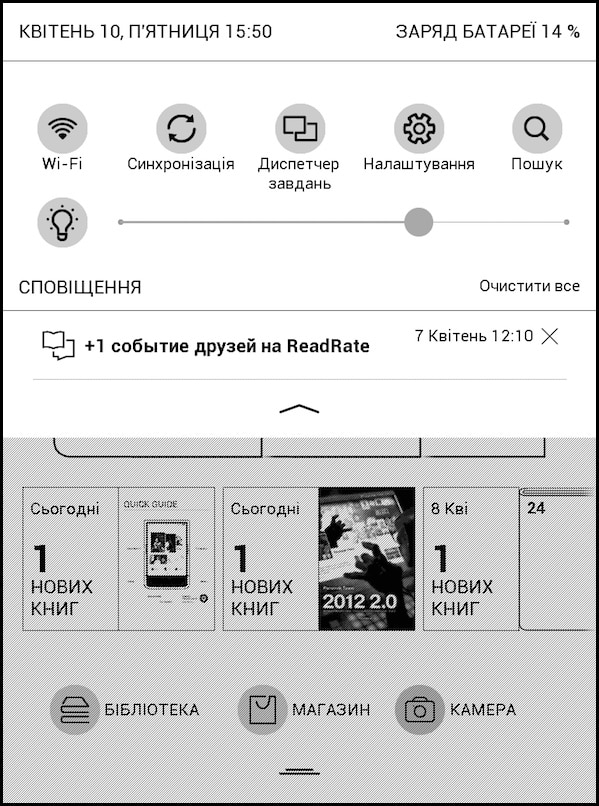
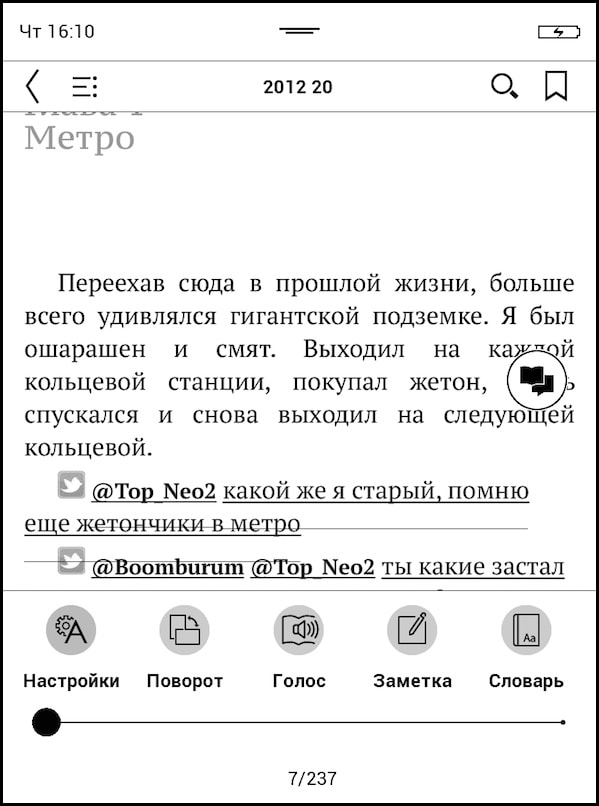
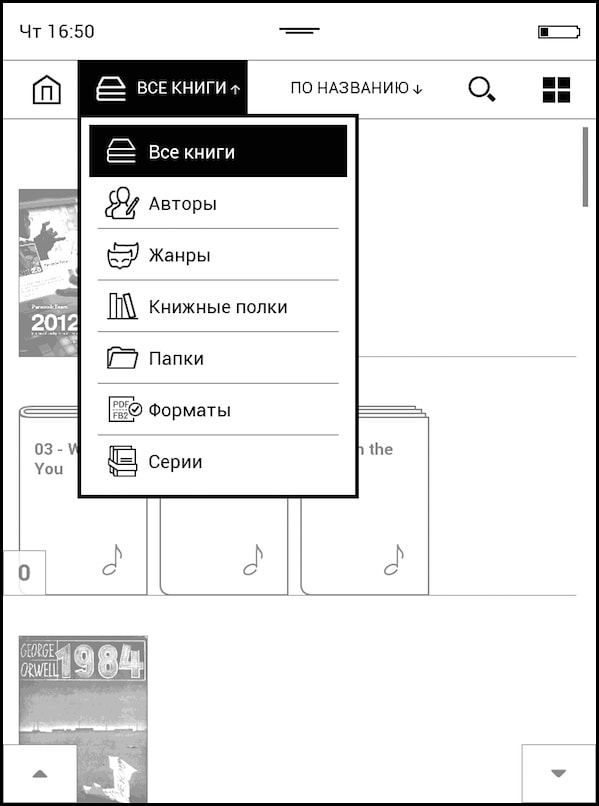
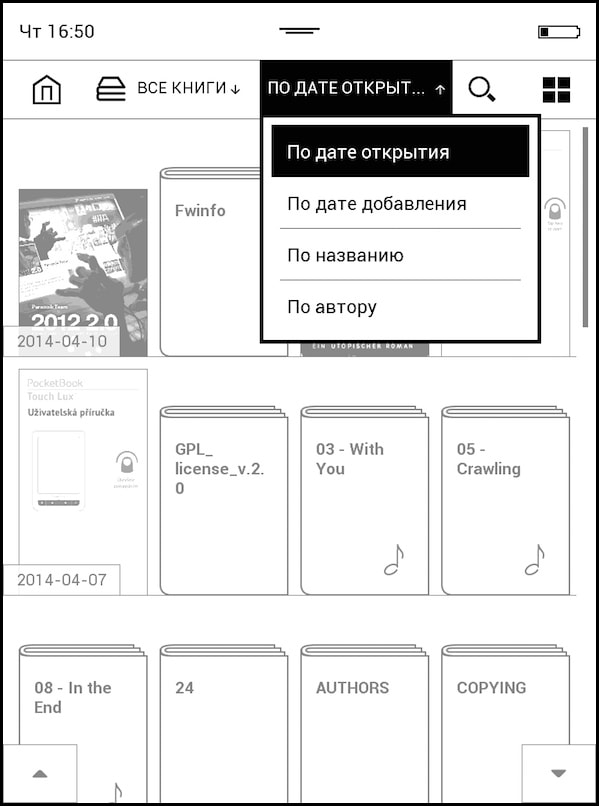
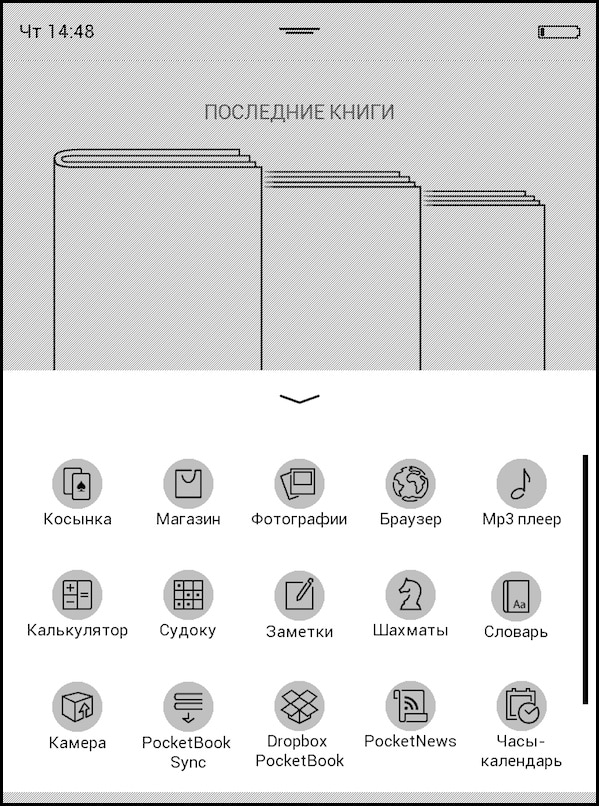
New Screenshots Confirm the Pocketbook Ultra Will Have a Camera, Text to Speech

Pocketbook released a set of screenshots this morning which inadvertently reveal more details about the Pocketbook Ultra, their upcoming high-end ereader which has yet to be officially announced.

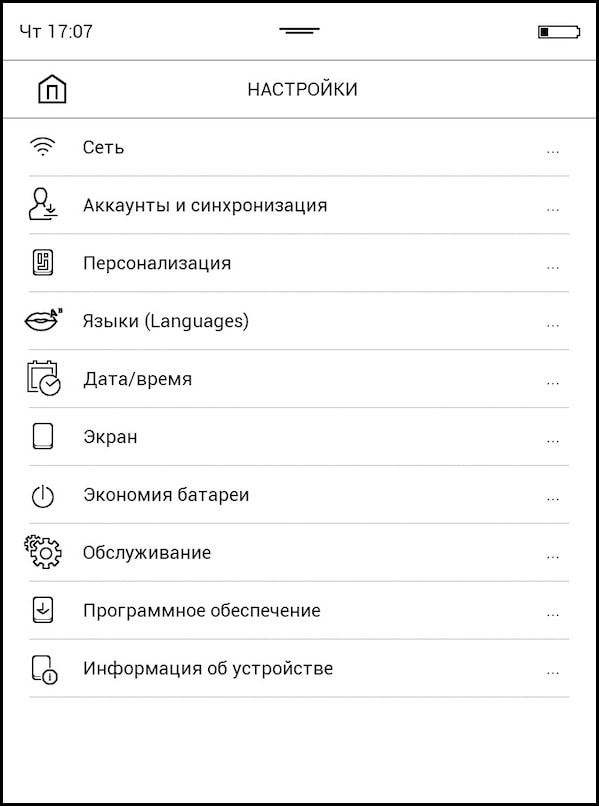
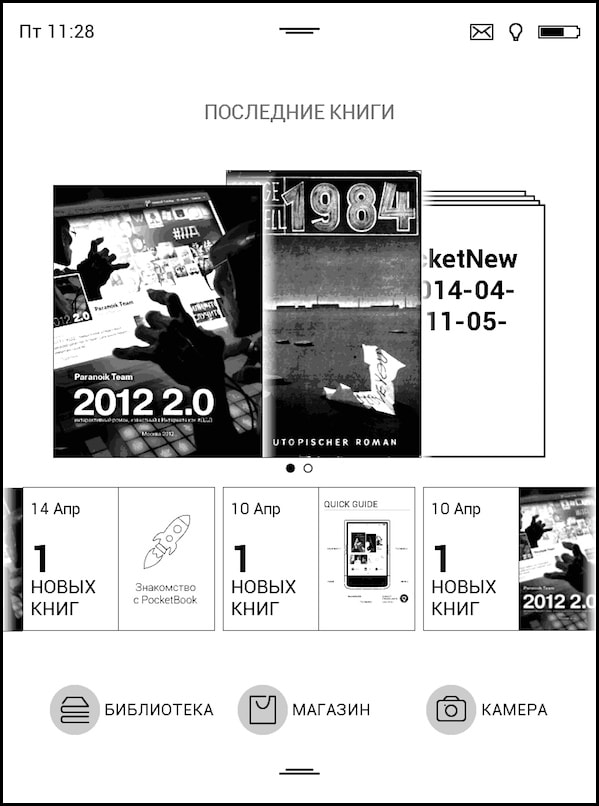
The screenshots show the interface that Pocketbook will be using on their next ebook readers, and while there’s no specific mention of the model it does appear that these screenshots came from the Ultra.

The Pocketbook Ultra will be a 6″ ereader with a Carta E-ink screen and a rear facing camera and OCR capabilities. Or at least that is what the leaks have suggested and now the screenshots have confirmed.

If you flip through the screen shots you’ll see that they are in grayscale, just like what you would expect from an ebook reader with an E-ink screen. The text is in Russian Ukrainian, so there isn’t much that I can get out of it, but if you look at the first and the last screenshots you will probably notice the word "KAMEPA". If you phonetically translate that from the Cyrillic characters you will get the word camera.

That is about the limits of my abilities to read Russian Ukrainian, but the other screenshots show symbols which suggest features like text to speech. And if you can read it you will probably be able to pick up other clues.

The screenshots are embedded in a gallery below, and if you want to download a copy of the screenshots here is a ZIP file.

Do you see anything interesting?

The-eBook.org

Onyx Boox i63ML Newton Now Shipping in Russia – Carta E-ink Screen, Android 2.3

The Chinese ereader maker Onyx continues to delight ereader buyers this week with the launch of a new model in Russia.

The Boox i63ML Newton is the third device to feature a Carta E-ink screen (following the Kindle Paperwhite and the Tolino Vision). It’s available today from a number of Russian retailers with a retail of 6,990 rubles (about $199 USD).

The Newton runs Android 2.3 Gingerbread on a 1GHz CPU with 512MB RAM. It has 8GB of internal storage as well as a microSD card slot. The 6″ screen has a resolution of 1024 x 758 and comes with a frontlight and an IR touchscreen.

Weighing in at 238 grams, the Newton has a 1.6Ah battery and is about the size of other 6″ ebook readers. Like Onyx’s other models, it supports a wide variety of ebook formats, including PDF, Epub, FB2, PDB, and Mobi. The Newton also supports a number of document formats, including CHM, DJVU, HTML, RTF, and Doc.

There’s no mention of mp3 support (but OGG and BMP are listed) and it lacks a headphone jack/speaker, which means that the Newton _may_ lack the Ivona text to speech features found in other Onyx devices. But on the plus side this device does ship with Google Play. Given the combination of an E-ink screen and 3-year-old OS, I’m not sure how many Android apps will run on it but at least readers will get to try.

This is the third device to use E-ink’s latest screen tech, and it is quite the disappointment. I have been expecting Onyx to release an ereader with a Carta screen, but I was also expecting it to run Android 4.0 or above. Onyx has a smartphone and ebook readers that run a newer version of Android, but the Newton is one of the models that hasn’t been updated.

A $200 price tag is rather steep, and if the Newton had been running Android 4.0 that would have gone quite a ways to justifying the price. The newer version of Android would have enabled users to support more apps, and thus add more features.

Thanks, Leonid!

The Other Shoe Drops – Sony to Close Worldwide Reader Store, Hand Customers to Kobo

The ebook retailer formerly known as Sony sent out an email to its customers this morning, telling them that it plans to close the Reader Store in Europe and Australia in the middle of June.

It’s official: Sony is (mostly) getting out of ebooks.

Following just over a month after shutting down the NA branch of the Sony Reader Store, Sony is now shutting down the Reader Stores in Australia, Germany, the UK, and Austria. The stores will close by 16 June, and any existing customers will be invited to join their fellow ex-Reader Store customers and transfer their accounts to Kobo.

Oddly enough the Sony Reader Store in Japan has survived the extinction, or at least there is no notice on that site announcing the closure. Given that that site added features only a couple months ago I am not surprised it remains unaffected.

Having launched the Data Discman in the year 1990, Sony has a long and storied history with ebooks. This Japanese tech giant was one of the first companies to enter the commercial ebook market close to 3 decades ago, a market which for most of the 1990s it shared with very few companies. And with the US launch of the Sony Reader in 2006, Sony was the first company to enter the third wave of ebooks, preceding the launch of the Kindle by over a year.

You would think that Sony was poised to be a major player in ebooks, but that never happened. While Sony put a lot of work into developing beautiful ebook readers, they neglected to put equal work into their ebookstore or platform. The support software was terrible until well into 2010, and even as far back the PRS-500, some of the Sony Readers' best features were the work of 3rd-party hackers, not Sony.

And even at its height, the Sony Reader Store only operated in 7 countries. That’s not a sign of great interest or investment on the part of Sony.

Over the next few weeks Sony should be sending out an email to their customers with instructions for switching over to Kobo. For more details, visit the Reader Store help page.

As part of the hand over to Kobo, Sony will be releasing updates for the Sony Readers. These update will enable Sony Reader owners to buy ebooks from Kobo from the device. The first update was released in late March, but since it only cut the connections to the Sony Reader Store there is little reason to install it. A second update is in the works which will add the ability to sync purchases with Kobo, and it is expected to be released in late May 2014.

On a related note, it’s not clear how this update will affect customers in other markets where Sony never launched a Sony Reader Store. For example, Sony is selling the Sony Reader PRS-T3 in Spain and France even though they never opened a branch of the Reader Store in those countries. This update also offers no clue as to whether Sony will release a new ereader this year or next, but I don’t think that will be happening.

Textbook Publisher Claims License on New Edition, Demands Students Return the Paper Textbook

No publisher hates the first sale doctrine more than textbook publishers. Over the years they have tried numerous tricks to stop students from reselling their books, including releasing new editions containing minimal revisions, bundling licensed digital content, and convincing professors to create custom editions.

Wolters Kluwer, via their law publisher subsidiary Aspen, has come up with a new scheme to discourage law students from reselling their legal casebooks. According to Josh Blackman, a law professor in Texas, they are attaching a license to the sale of paper books:

I recently received a bizarre email from Aspen, the publisher of the Dukeminier/Krier/Alexander/Schill/Strahilevitz Property casebook I use. In short, the next edition of the book will be have to be returned at the end of the semester, and cannot be resold. This temporary usage comes with a permanent digital version. In effect, buying the textbook gives the student a license to use the book for a single class, as well as a digital version. And it’s the same price! Of course, students are not going to actually return the book (BarBri offers a payment to incentivize that), but the book stores will not be able to legally resell it. This will instantly dry up the reused market for casebooks.

He goes on to quote the email he received, which says in part:

Dear professor,

Thank you for adopting Dukeminier/Krier/Alexander/Schill/Strahilevitz, Property text. We are pleased to announce that this title will be part of our new Connected Casebook program. The Connected Casebook program is intended to provide students access to a greater wealth of learning tools than offered previously, with no change in price. Under the Connected casebook program, your students will receive:

• A new, bound version of the casebook, which can be marked-up, highlighted, and kept through the length of the course, but which must be returned to us at the conclusion of the class.

• Lifetime access to CasebookConnect, a rich digital companion to the casebook, containing a full digital version of the casebook as well as selected proven learning accelerators, such as examples, explanations, and a collection of issue-spotting and hypothetical exercises

This almost certainly won’t stand up in court, but you have to give Wolters Kluwer credit for a novel attempt at rewriting constitutional law (and for using law students as its victim).

The thing is, this is not the first time that a publisher has tried to attach a license to the sale of a paper book. It has been tried before, and in 1908 a lawsuit over a similar license led to Bobbs-Merrill Co. v. Straus, the Supreme Court decision which formalized the First Sale Doctrine.

According to Wikipedia:

Bobbs-Merrill Company sold a copyrighted novel, The Castaway by Hallie Erminie Rives, with the notice, "The price of this book at retail is $1 net. No dealer is licensed to sell it at a lower price, and a sale at a lower price will be treated as an infringement of the copyright" printed immediately below the copyright notice. The defendants, R.H. Macy & Co., purchased large lots of books at wholesale and sold copies of the book at retail at the price of 89 cents a copy.

That case is not identical with the trick Wolters Kluwer is trying to pull, but it is clearly close enough that it can be cited as a precedent. With that in mind, I don’t see how a student who buys their casebook online or via a college bookstore can be forced to give it up.

Sure, if the casebook is bought directly from the publisher it might be able to extract a contract from the student, and it is also possible the ToS for the website might also include a clause which would require the casebook be returned (and even that might not be enforceable; a student could simply refuse to use the site).

In any case, law students have a strong financial incentive to not go with the flow. According James Grimmelman:

Casebooks are a noticeable part of the cost of a legal education. Aspen casebooks now frequently cost upwards of $200. A student who used one in each of four classes a semester for three years of law school would spend nearly $5000 on casebooks alone. Students have quite understandably responded by turning to used copies—a practice Aspen now appears to be trying to stamp out. If it succeeds, the added cost will hurt students, schools, professors, and the legal profession. I hope that Aspen will reconsider this ill-advised move.

That’s a heck of a lot of money for a student, even for one who is already working a day job and going to law school at night.

New Leak Reveals HP’s New Tablets Look an Awful Lot Like Hauwei’s Tablets

Like almost any gadget maker, HP always has a bunch of tablets in the works, and past leaks and rumors have hinted that some of the upcoming tablets include the HP Slate 8 Plus and the HP Slate 7 Beats Special Edition.

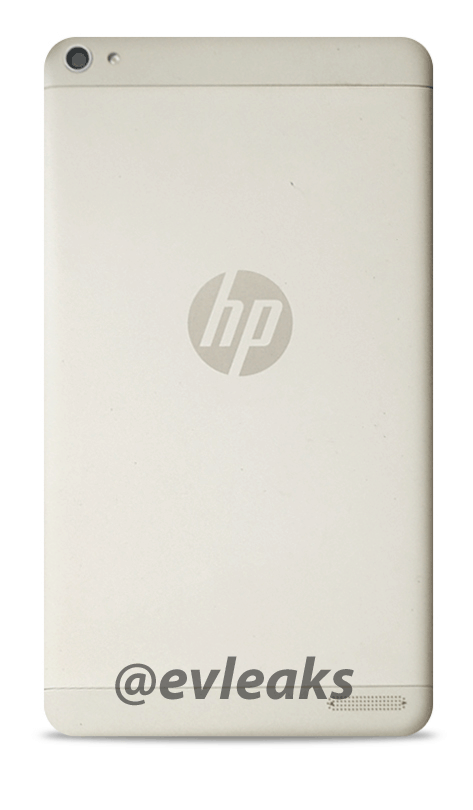
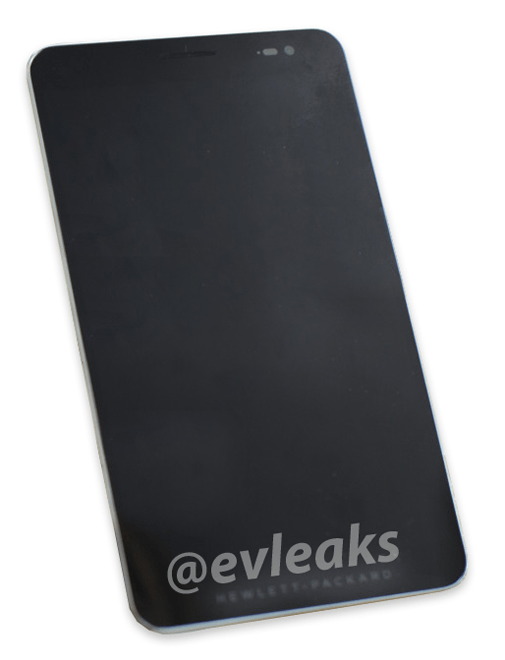
Yesterday the font of all leaks @evleaks posted a set of images which show a couple of HP’s new tablets.

The tablets are unnamed and lack any clearly identifying details, but it looks to me like there are only 2 models shown (unless the angle shots are throwing my guesstimates). We could be looking at the 7″ and 8″ models mentioned above, but HP has released 6″ and 7″ models elsewhere in the world, including models which have shown up at the FCC.

Do you have any guesses as to what we’re looking at?


Update: Mike Cane has pointed out that at least one of these tablets bears a striking resemblance to the HTC One. He also suggests that HP could be licensing the Hauwei MediaPad M1 design. It’s close enough that I wonder if he is right (please excuse the bad image editing):

Update: a reader has pointed out that both of the new HP tablets resemble the Hauwei X1 and M1 tablets which were launched at Mobile World Congress in February. (Thanks, jjj!) I think jjj is right, and so is Mike Cane; HP is licensing these designs (or @evleaks has been had, which I doubt).

The M1 is an 8″ tablet with a screen resolution of 1280 x 800 and X1 is a 7″ tablet with a screen resolution of 1920 x 1200. Here’s the X1 side by side with the leaked HP tablet:


Liliputing

Comixology Had a DRM-Stripping Tool Removed from Github

Over the past few days this blogger has been working on a post for the International Day Against DRM, which is coming up on Tuesday, and while I was double-checking some information on DRM removal tools I discovered that one such tool had vanished.

In January 2014 I wrote about a Chrome plugin which enabled a user to download and strip the DRM from digital comics which had been legally purchased from Comixology. Sadly, that plugin is no more. According to a takedown notice dated 2 April, the plugin has been removed from Github at the request of Comixology.

The plugin had been online for about 3 months, enabling users to backup their purchases, before being taken down. To be honest it was really only effective up until that security scare in early March, when Comixology discovered that their servers were hacked. Whatever they did to tighten security also broke the the Chrome plugin.

This is at least the second such tool to be vanished by Comixology; I also found mentions of a previous tool which briefly made an appearance in May 2012 before it too was DMCA-ed by Comixology:

Earlier this week, some dude posted to the Reddit Comic Book board that he had written a short Bash script (for the technologically challenged, think an old Windows batch file with ambition) that would allow you to download any digital comics you purchased from ComiXology, strip the DRM, and convert them to a format you can store locally and read on anything. Clearly this is a young man with plenty of free time to spend frittering on coding and hanging around in courtrooms.

The script author even posted a copy of the script with detailed instructions on how you could use it to download copies of the books you bought from ComiXology. Isn’t that nice? Oh, don’t go searching for it – ComiXology caught wind of it and asked the kid to delete the script.

I was hoping to link to a Comixology DRM removal tool in my post for Tuesday, but at this point I don’t know where to find one.

If you know where I should look, please send me an email or leave a comment. As we have been reminded many times over the years, no platform lasts forever. The only way to keep our purchases safe is to exert true control by downloading a backup copy and removing the DRM.

New Look at the Onyx Boox T68 E-ink Android Tablet – 6.8″ Screen, Android 4.0

If you thought Kobo was the only one with a 6.8″ ebook reader then you’re in for a shock. Charbax caught up with Onyx a few weeks ago at the HKTDC Hong Kong Electronics Fair and got us our second look at the Onyx Boox T68.

This device, which I first reported on last October, runs Android 4.0 on a 1GHz Freescale CPU. It’s been under development for nearly a year now, and according to one of my sources it is just about ready to enter mass production (this confirms what is said in the video).

The T68 is in many ways an Android tablet, and with a weight of around 250 grams it has the mass of one as well. It comes with a frontlight and touchscreen, and under the hood it packs in 512MB RAM, 4GB Flash storage, a microSD card slot, a headphone jack, Wifi, and Bluetooth.

Best of all. the Boox T68 is equipped with a 6.8″ Pearl E-ink screen – the same screen as on the Kobo Aura HD.This screen has a resolution of 1440 x 1080, and it also features E-ink’s latest partial and full screen refresh tech.

The video is rather short, but at least it does tell us that the T68 should enter mass production in June.

Later in the video Charbax gets his hands on the M96. This is Onyx’s newest 9.7″ device, and it too runs Android 4.0 on a 1GHz CPU. And like the T68, it will ship with Google Play and access to all the apps sold there.

There is no guarantee that the apps will work on either device, but just the possibility that they could work adds a lot of value to what would otherwise be a very expensive ebook reader.

Boox T68 product listing